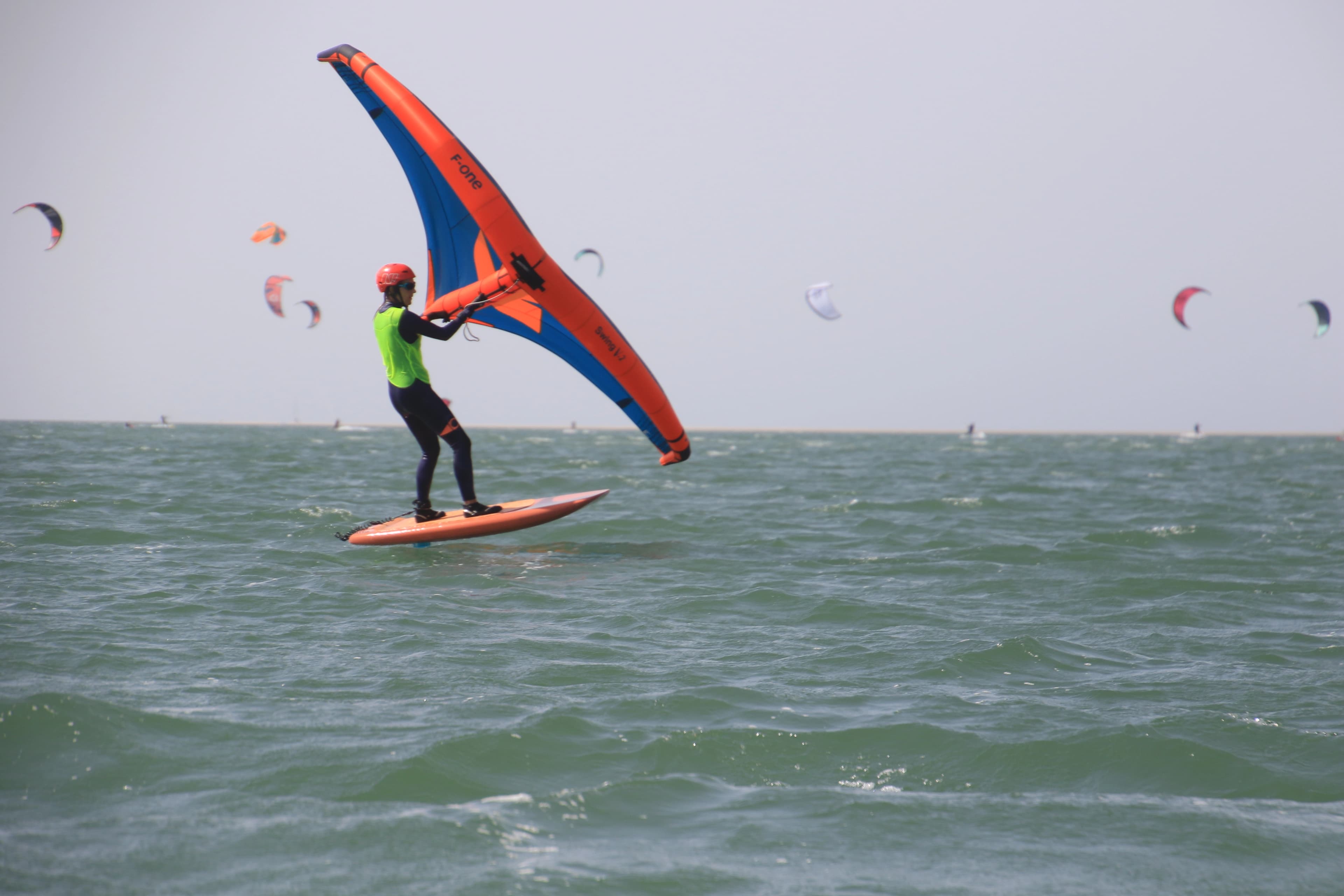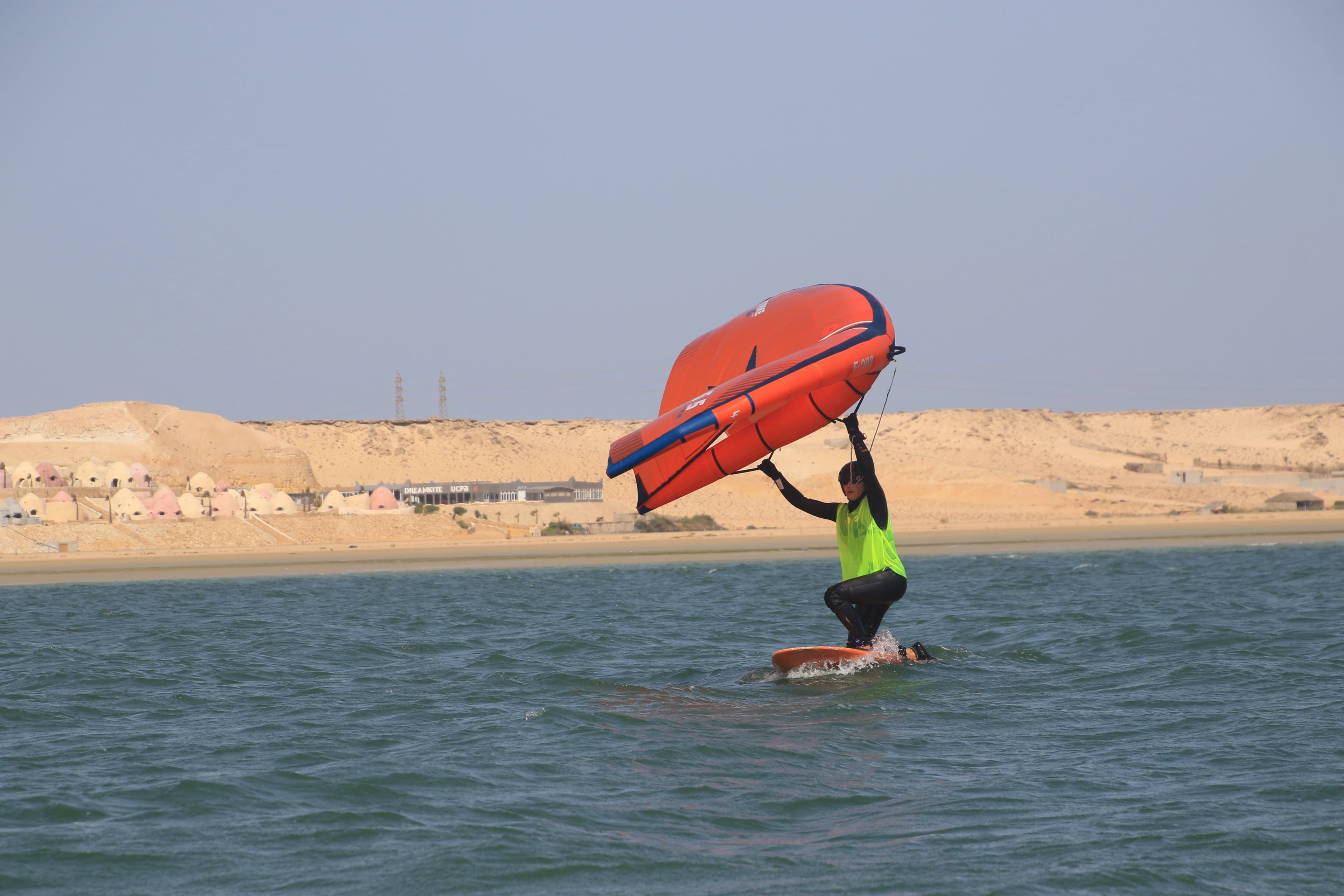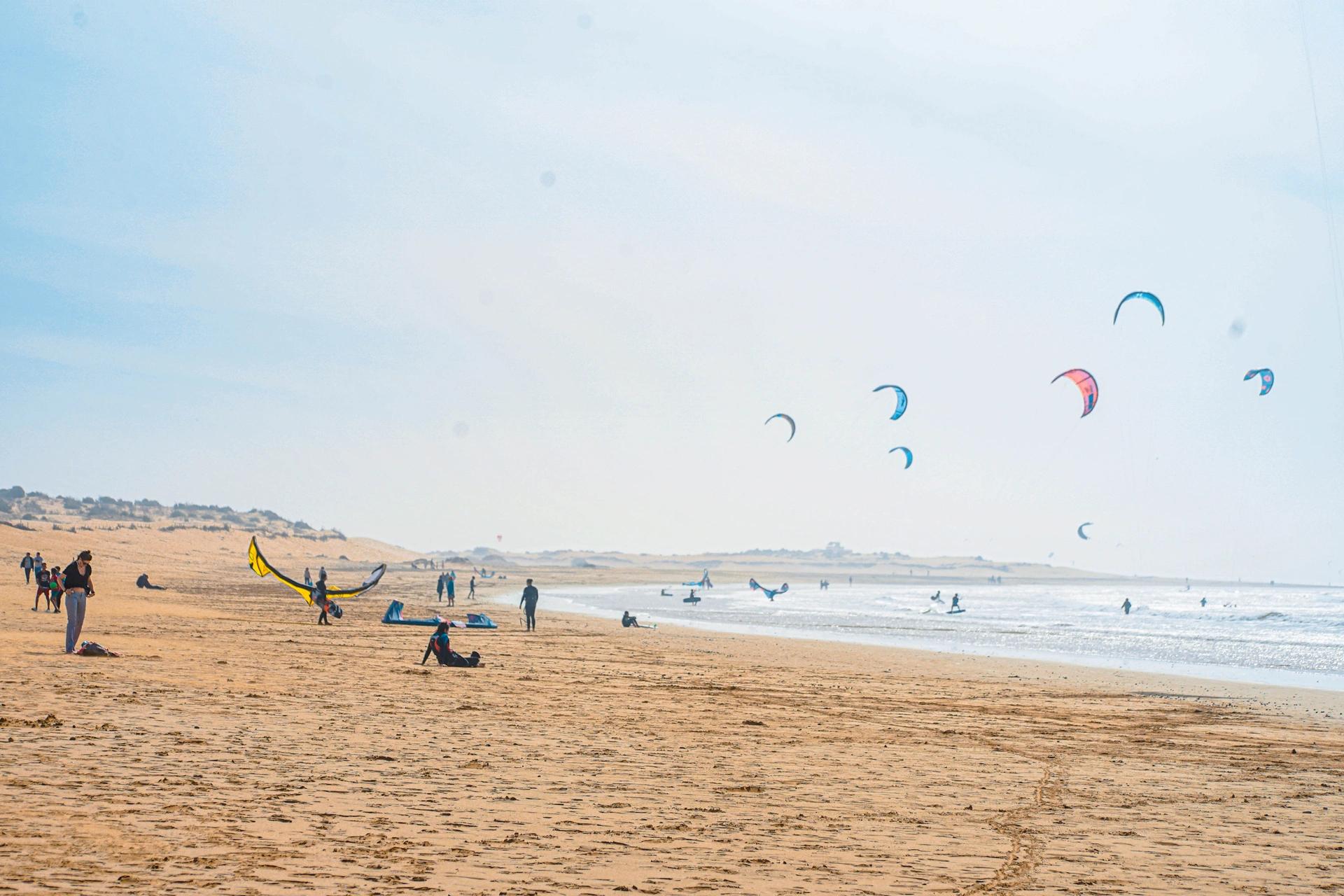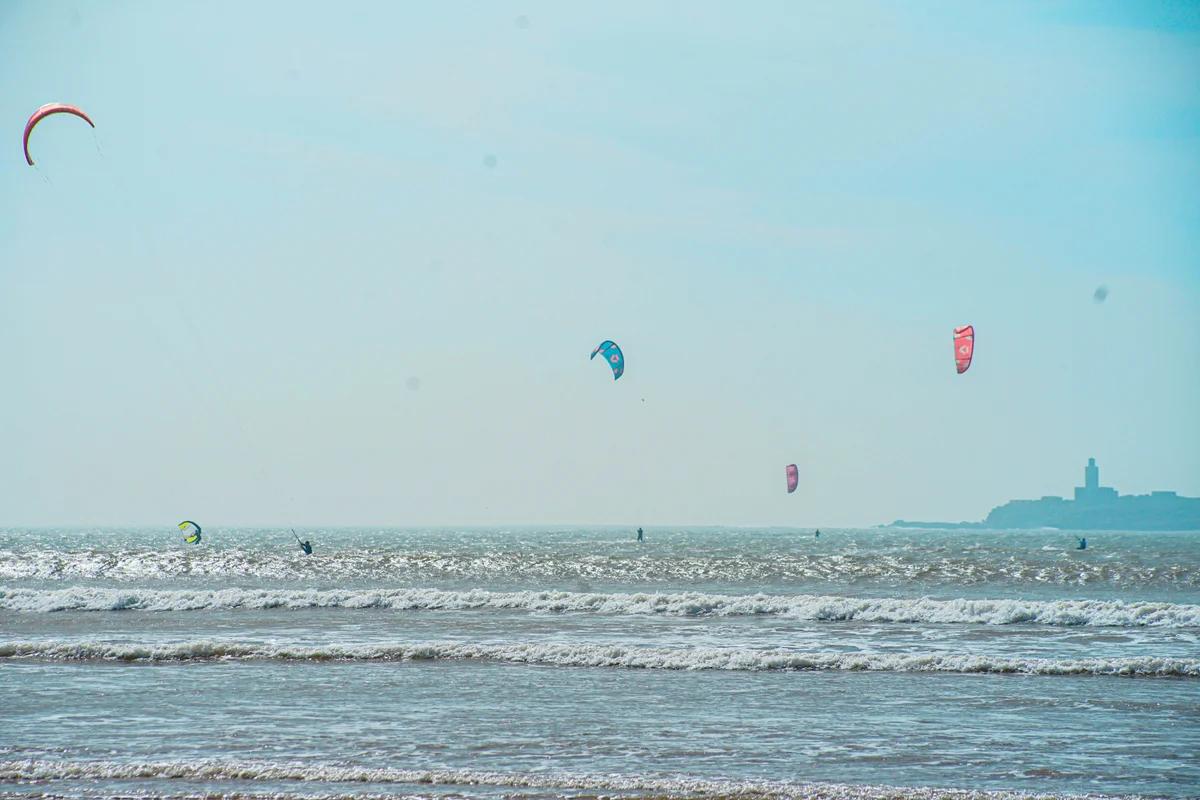
Imagine this. You are on a stretch of Atlantic beach, inside the city of Essaouira. The trade wind is steady on your back. The medina is a short walk behind you. The water in front of you has been scouted by the team that morning to find the flattest section of the day. A wing is in your hands, and the rest of the afternoon is about figuring out how it works.
That is what a wingfoil session here actually looks like. Not a generic beach. Not a random spot. A specific area chosen on the day for the best possible learning conditions.
Why Essaouira Works for Wingfoil#
Essaouira sits on a stretch of Atlantic coast exposed to the Alizé trade winds. The wind blows year-round, and the long beach gives the team room to choose where to set up depending on the day. This is the foundation of why sessions here work.
The main beach is wide and central. You can walk to it from most accommodation in the medina in just minutes. There is no transfer chain, no shuttle bus, no half day lost to logistics. You finish breakfast and you are on the beach. The team meets you either right there or at our school space nearby. From that point on, the day belongs to the water.
You can book your wingfoil lessons in Essaouira directly, or keep reading to see how the sessions are structured.
Choosing the Right Water Every Day#
This is where local knowledge actually matters. Essaouira's main beach has different sections that behave differently depending on swell, wind angle, and tide. The crowded zone in front of the city is the busiest. Just downwind from there sits a quieter area called Deuxieme Plage, and on most days this is where wingfoil sessions happen.
Deuxieme Plage has a section of flatter water and more consistent wind, especially on its right side. That combination is what makes wingfoil learning work: enough wind to power you, calm enough water to focus on the wing and the foil without fighting chop.
When the swell is up and Deuxieme Plage is not at its best, the team picks another spot along the beach that suits the conditions. Sometimes the better option is to push the session to a different moment of the day, when the water flattens or the swell drops. The team watches the conditions throughout the morning and makes the call based on what will give you the best experience, not what is most convenient.
That flexibility is the difference between a productive session and a frustrating one.
Day 1: Wing Control and the Big Board#
Your first session lays the two foundations that everything else depends on: handling the wing and balancing on the board.
It starts on the beach with the wing in your hands. The instructor walks you through how it catches power, how to angle it, how to depower it instantly by letting the front edge tilt forward. You practise this on the sand until the movements stop being instructions and start feeling natural. The wing is intuitive once you stop overthinking it.
Once the wing handling is solid, you step onto a big, stable board with no foil underneath. Just a wide platform on the water. You hold the wing, it catches wind, and you start moving across the flat section the team picked for you. The board is forgiving. It does not tip easily. Your job is simple: stay balanced, steer with the wing, and learn to control both tools at the same time. For this stage, the team can use a shallow area where you can stand if you fall, since there is no foil to worry about.
This is where the first laughs happen. You will wobble. You will drop the wing and watch it float for a moment before you pick it up and try again. By the end of day 1, most beginners can ride across the water on the board, control the wing through basic turns, and depower without panicking. No foil yet. That comes when you are ready.
Day 2: The Foil with Controlled Lift#
If day 1 went well, day 2 is where things start to feel different.
The board now has a foil underneath, but not the full setup. The team uses a specific configuration designed to produce only small, controlled lifts. You ride the same way you did yesterday, same wing technique, same balance, but now the board starts to rise. Just a few centimeters. Just enough to feel the water release and the board begin to glide above the surface instead of pushing through it.
This moment is hard to describe to someone who has not felt it. The resistance disappears. The sound changes. The board stops splashing and starts floating. Even if it lasts three seconds before you lose balance, those three seconds rewire something. You understand what wingfoil actually is.
The instructor is right next to you the whole time, watching your foot position, your wing angle, your weight distribution. Every correction is immediate. The feedback loop is tight because the conditions allow it: flat water on the section the team chose, steady wind, no chop fighting your reading.
Day 3 and Beyond: Full Foil and Real Progression#
Day 3 is usually when the brain and the body start agreeing. The wing handling is automatic. The board balance is natural. The foil lift is not a surprise anymore. It is something you initiate and control.
You move to a standard foil setup. The lifts are higher, the speed increases, and the glide extends. You start to ride for 20, 50, 100 meters above the water. You learn to control altitude by shifting your weight, and you learn to turn by combining wing angle with body lean.
From here, progression accelerates. Each session builds on the last. By the end of a 4 to 6 session block, most people are riding independently on the foil and starting to work on transitions.
For intermediate riders who arrive already comfortable on the foil, the sessions pick up from wherever you are. Tacks, jibes, riding toeside, speed control, upwind efficiency. The beach gives you space to drill specific skills, and the team adapts the spot to your level just as carefully as they do for beginners.
If you want a fuller picture of what makes wingfoil safe when taught correctly, our breakdown of wingfoil risks and the methodology that removes them covers exactly how the progression is structured.
What Happens Between Sessions#
The session ends. You are tired in that specific way where your forearms are burning but you are grinning. You wrap up the gear with the team and the rest of the day is yours.
Essaouira's beach is inside the city. The medina is a short walk away. You eat at a beachfront cafe, you sit in a square in the medina, you watch the ocean from the ramparts. Fresh fish at the harbour. Tagine in a small restaurant. The kind of rhythm that turns a watersport trip into something more.
If you want a second session later, you tell the team and you meet again at the agreed time. The schedule is flexible because the wind usually is too.
The atmosphere among riders is the same as the rest of Essaouira: relaxed, welcoming, low pressure. No localism, no aggressive crowds. You are sharing the spot with people who care about the same thing, and the conversations on the beach happen naturally. Our piece on why Essaouira works as a watersport destination covers more of what the city brings to a trip.
Wingfoil Year-Round#
Wingfoil works in Essaouira throughout the year. The wind shifts between stronger summer trade conditions and lighter, more variable winter days, but rideable sessions happen across the calendar. The team adapts wing size, board choice, and the spot itself to what the day delivers. Our seasonal wind guide for Essaouira breaks down what the wind does month by month if you want to plan around specific conditions.
What matters more than the season is that the team checks the conditions every morning and picks the setup that gives you the best session, every time.
Who This Is For#
You do not need experience. The sessions start from zero and build step by step. You do not need to be athletic. You need to be willing to fall, laugh, and try again.
You do not need to come with a group. Solo travelers integrate naturally with the team and other riders on the beach.
You do not need to bring gear. Everything is provided: wing, board, foil, harness, wetsuit, and safety equipment.
You just need to show up. The beach and the team handle the rest.
Ready to plan your sessions? You can book your wingfoil lessons in Essaouira or reach out to the team to talk through dates, level, and what to expect.
Frequently Asked Questions#
Where exactly do you teach wingfoil in Essaouira?
On the main beach. The team scouts the section with the flattest water and most consistent wind each day. Deuxieme Plage, just downwind from the busy central zone, is the most common choice.
What happens if the swell is up?
The team picks a different section of the beach that suits the conditions, or pushes the session to a moment of the day when the water flattens. The goal is always to give you the best possible water to learn on.
Do I need previous experience?
No. The sessions start from zero: wing handling on the beach, then big board without foil, then foil with controlled lift, then full foil setup. Each step builds on the last.
What if I am already intermediate?
The team picks up from your current level. Tacks, jibes, toeside, speed control, upwind work. No time wasted repeating fundamentals you already have.
How do I get to the lesson?
You meet the team either at the beach directly or at our school space nearby. Most accommodation in the medina is within walking distance, so there is no transfer needed.
Is gear provided?
Yes. Wing, board, foil, harness, wetsuit, helmet, and impact vest are all included.
Can wingfoil be done in Essaouira year-round?
Yes. The wind shifts between stronger summer conditions and lighter winter days, but rideable sessions happen across the year. The team adapts the spot, the gear, and the session timing to the conditions.
Do I need a wetsuit?
Yes. The Canary Current keeps the water cool even in summer. A 3/2mm wetsuit works for summer, and a 4/3mm is recommended for winter. Wetsuits are provided.
Our team teaches wingfoil on Essaouira's main beach throughout the season. This article reflects how real sessions are run, not theory.