If you already know how to kitesurf and want to ride Dakhla's lagoon without shipping your own gear, renting locally is the most practical option. The lagoon's conditions are specific, and having the right kite size and board type for the day makes a real difference in how much you enjoy your sessions.
This guide covers what rental gear is available in Dakhla, how pricing works, what insurance means, and how to choose the right setup for lagoon conditions.
What Gear Is Available#
Rental equipment in Dakhla covers everything you need for a full kitesurf session:
- Kite: Various sizes matched to your weight and the day's wind. The team uses current-year Duotone and F-One kites, maintained daily.
- Bar and lines: Included with the kite. Bars are checked and re-rigged regularly.
- Board: Twin-tip boards in multiple sizes. Surfboards are also available if you prefer wave-style riding on the lagoon.
- Harness: Seat or waist harness depending on your preference.
- Wetsuit: Included if needed. Dakhla's water is warm in summer but cooler in winter months.
All equipment is current-year production. Kites and boards are inspected after every session, and damaged gear is rotated out immediately. You are not riding patched-up equipment from three seasons ago.
Pricing Structure#
Kitesurf gear rental in Dakhla follows a tiered pricing model. The longer you rent, the lower the effective daily rate.
- Half day: 45 EUR
- 1 day: 60 EUR
- 2 days: 110 EUR
- 3 days: 160 EUR
- 5 days: 250 EUR
- 1 week: 350 EUR
These prices cover the complete kitesurf setup: kite, bar, board, and harness. You do not pay separately for each item.
For riders who also want to try wingfoil during their stay, combo gear rental is available starting at 70 EUR per day, covering both disciplines.
You can view all rental options and book here.
Insurance: What It Covers and Whether You Need It#
Optional daily insurance is available at 9 EUR per day for kitesurf gear. This covers accidental damage to the equipment during normal use.
What insurance covers:
- Kite tears from crashes or contact with obstacles
- Board damage (dings, cracks) from impacts
- Bar and line damage during normal riding
What insurance does not cover:
- Deliberate misuse or negligence
- Loss of equipment (gear carried away by wind or current) Should you get it? If you are riding independently and pushing your limits (jumping, wave riding, downwinders), insurance is worth it. A kite repair can cost significantly more than a few days of coverage. If you are a steady rider on flat water doing cruising sessions, the risk is lower, but it is still a small price for peace of mind.
Choosing the Right Kite Size for Dakhla#
Dakhla's lagoon has reliable wind, but the strength varies by season. Picking the right kite size is the single biggest factor in how good your session feels.
General kite size guidelines for Dakhla:
55-65 kg: 12m in light wind (15-18 kts), 10m in medium wind (18-22 kts), 7-8m in strong wind (22-28 kts)
65-80 kg: 14m in light wind, 12m in medium wind, 9-10m in strong wind
80-95 kg: 14-17m in light wind, 12-14m in medium wind, 10-12m in strong wind
These are approximate. The team checks wind conditions every morning and recommends the right size based on the forecast, your weight, and your riding style. If you are unsure, ask before you launch. Riding an oversized kite in strong wind or an undersized kite in light wind both lead to frustrating sessions.
Seasonal wind patterns:
- April to October: Strongest and most consistent wind. Most riders use 9 to 12m kites.
- November to March: Wind is still present but can be lighter on some days. Having access to a 12 to 14m kite helps cover variable conditions.
For a detailed breakdown of Dakhla's wind by month, our weather and wind guide covers temperatures, wind data and wetsuit recommendations.
Board Selection: Twin-Tip vs Surfboard#
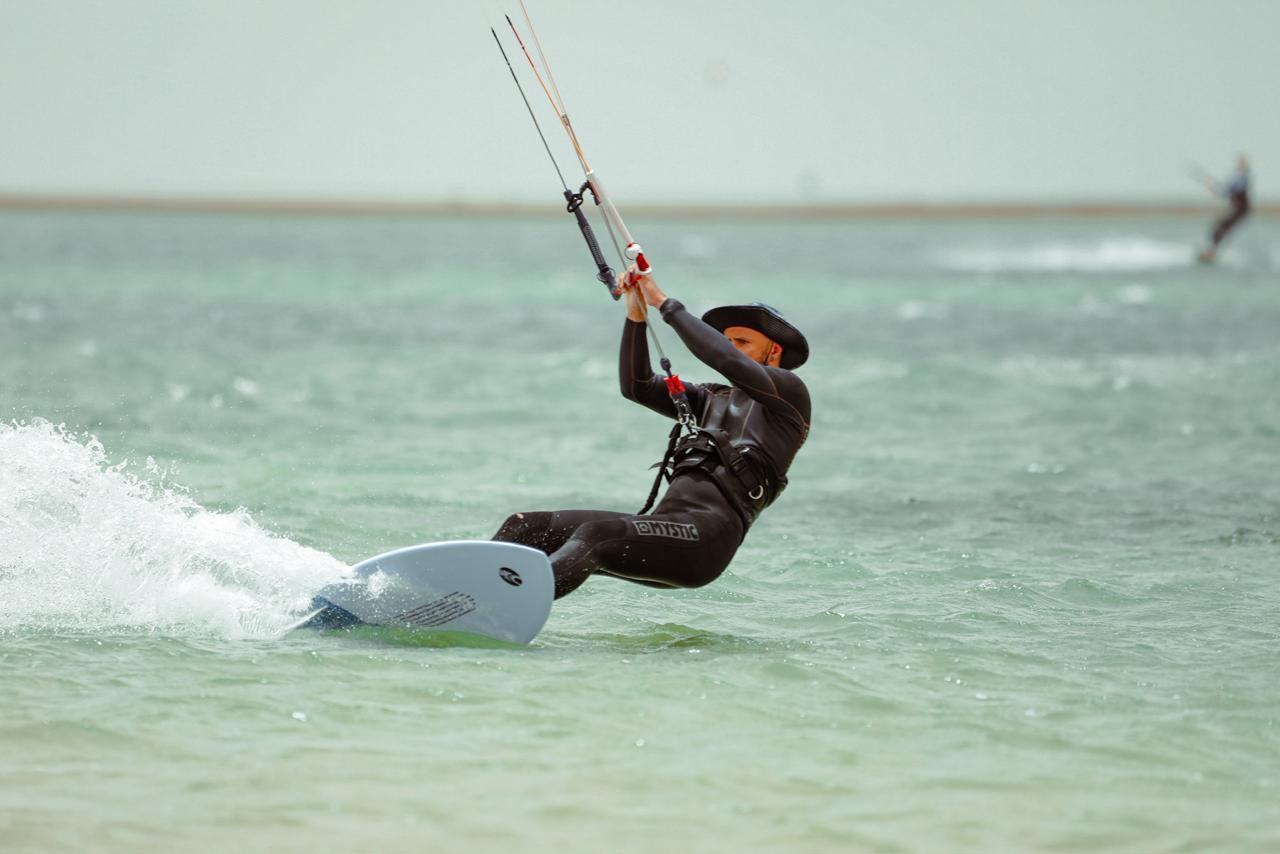
Most renters ride twin-tip boards, which are the standard for flat-water kiting on the lagoon. Twin-tips are symmetrical, easy to ride in both directions, and forgiving for all levels.
When to choose a surfboard instead:
- You want to practise wave riding technique on flat water
- You are heading to wave spots like Point d'Or
- You prefer the feel of a directional board and can ride toeside or gybe comfortably
The lagoon's flat water is actually a great place to practise strapless surfboard riding because falls are low-consequence. If you have never tried it, Dakhla is an ideal place to experiment.
What Level Do You Need to Rent?#
Rental gear is for independent riders. You should be able to:
- Launch and land your kite safely (or with minimal assistance)
- Ride upwind consistently
- Self-rescue if something goes wrong on the water
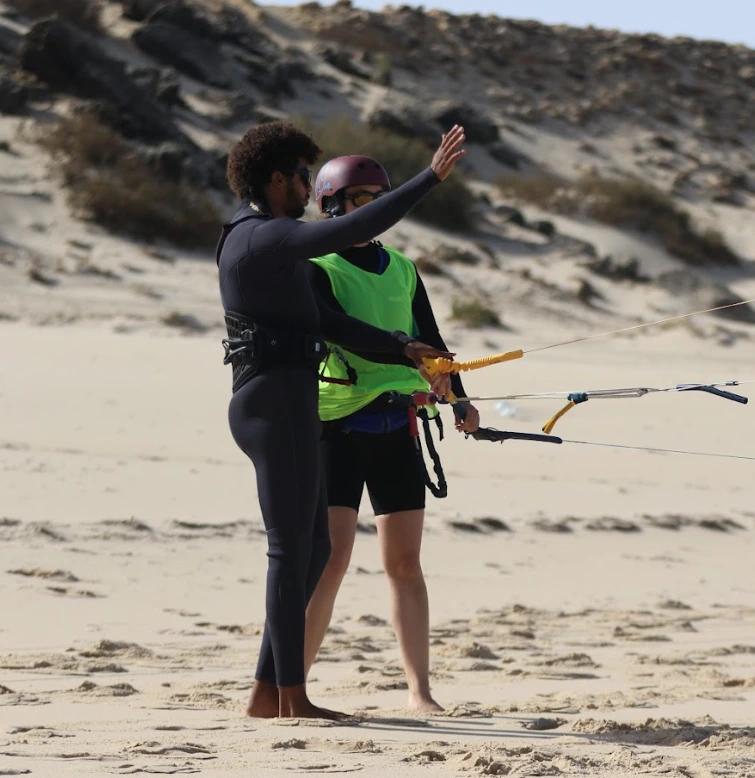
If you are still learning these fundamentals, lessons are a better starting point. The team will assess your level honestly and recommend the right path. There is no point renting gear if you spend the session drifting downwind and walking back.
For riders transitioning from lessons to independent riding, a supervised rental session can bridge the gap. Talk to the team about your comfort level, and they will advise whether you are ready.
If you need structured progression first, kitesurf lessons in Dakhla cover everything from first water starts to independent riding.
Where You Ride#
Rental sessions happen on the main lagoon. This is where the school operates: wide, shallow, consistent wind, and it works at most tides. You launch, ride, and return your gear from the same spot.
Other areas like Speed Spot, White Dune and Point d'Or are accessible through guided excursions, not standard rental sessions. These trips are organized separately and include transport and supervision.
For a detailed breakdown of the lagoon and its zones, our beginner spot guide explains how tides and wind affect each area.
Bringing Your Own Gear vs Renting#
Some riders prefer to travel with their own equipment. Here is how the two options compare for Dakhla:
Advantages of renting:
- No airline baggage fees (kite bags often cost 50 to 150 EUR each way)
- Access to multiple kite sizes for different wind days
- Current-year equipment without the capital investment
Advantages of bringing your own:
- Familiar equipment with your preferred settings
- No rental cost on longer stays (1 week+)
For trips of 5 days or less, renting almost always makes more sense financially. For longer stays, the math shifts, but you still get access to the right kite size for every condition without packing three kites.
Booking and Availability#
Rental gear can be reserved in advance through the booking page or by contacting the team directly. During peak season (April to October), demand is high across all kite sizes. Booking a few days ahead guarantees availability.
What to communicate when booking:
- Your weight and height
- Your riding level (how long you have been kiting, what you can do)
- The dates you want to ride
- Any specific preferences (surfboard, specific kite brand)
The team uses this information to prepare the right setup before you arrive at the lagoon. No wasted time sorting through gear on the beach.
Ready to ride? Reserve your rental gear here or contact the team to discuss your setup and conditions.
Frequently Asked Questions#
Can I rent just a kite without a board?
Yes. If you are travelling with your own board but want access to local kite sizes, the team can accommodate partial rentals. Discuss this when booking.
Do I need to bring a wetsuit?
Not necessarily. Wetsuits are available with the rental. From April to October, many riders kite in boardshorts or a thin rashguard. From November to March, a wetsuit is recommended and can be provided.
What brands are available?
The fleet includes current-year Duotone and F-One kites and boards. Specific models rotate based on the season and stock, but the gear is always recent and well-maintained.
Can beginners rent gear?
Rental is for independent riders who can ride upwind and self-rescue. If you are still learning, the team will recommend lessons first. There is no benefit in renting if you cannot ride safely on your own.
Is there a deposit?
Requirements may vary. Contact the team for current deposit policy when booking.
Can I extend my rental if conditions are good?
Yes, subject to availability. If you booked 3 days and want to add 2 more, the team will accommodate if the gear is not reserved by someone else. Extending early in your trip is easier than last-minute.
What happens if I damage the gear?
With insurance (9 EUR/day), accidental damage during normal riding is covered. Without insurance, you are responsible for repair or replacement costs. The team will explain the policy clearly before your first session.
Can I rent gear for a downwinder excursion?
Yes. Excursions like the White Dune downwinder require a separate gear rental on top of the trip price. You can book both together through the booking page or contact the team to arrange it.
Local coaching team based in Dakhla with 10+ years of experience. Daily gear maintenance and wind monitoring across all lagoon spots.