Kitesurfing safety in Dakhla is not only about the lagoon. The lagoon helps, but the school you choose matters just as much.
A wide flat-water spot, steady wind, and shallow sections create a strong safety margin. But serious kitesurfing accidents usually start before the rider is moving: the wrong kite size, poor launch control, no spot briefing, weak gear checks, or a rider going out without the level needed for the conditions.
That is why Bluboarding treats safety as a system, not as a sentence in a brochure. Every kitesurf lesson in Dakhla and every supervised rental starts with decisions made by the team before the kite flies.
The goal is simple: make kitesurfing in Dakhla safe, controlled, and fun by managing the biggest risk factors early.
Why Safety Starts With the School You Choose#
Kitesurfing is a powered sport. The kite can generate a lot of pull, and the rider is connected to it through lines and a control bar. That does not make the sport unsafe by default, but it does mean the setup must be handled correctly.
Good safety management answers practical questions before the session starts:
- Is the wind suitable for this rider today?
- Which kite size fits the wind, rider weight, level, and spot?
- Is the gear checked and correctly connected?
- Does the rider understand the launch area and riding zone?
- Who is launching and landing the kite?
- Does the rider know what to do if something goes wrong?
Those decisions are where a professional school makes the difference. A safe kitesurfing experience is not created by luck. It is created by repeatable checks, instructor judgment, and clear rules on the beach.
The Bluboarding Safety System in Dakhla#
Bluboarding's safety methodology is built around controlling the most common accident factors before they become problems.
IKO-certified instructors lead the session.
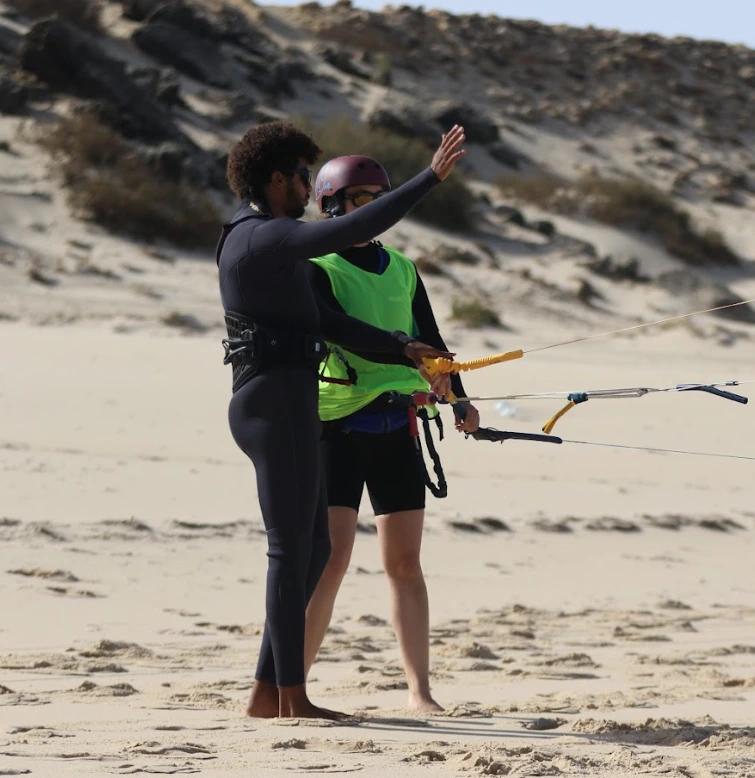
Lessons are run by instructors trained to teach progression, risk awareness, kite control, emergency procedures, and rider supervision. This matters because beginners often cannot judge wind strength, kite power, line tension, or safe distance by themselves yet.
Gear is checked before the session.
Kites, bars, lines, harnesses, safety leashes, boards, helmets, and impact vests are checked before use. A kitesurf session should not start with uncertainty about the equipment.
Kite size is selected by the instructor team.
The team chooses kite size based on wind strength, rider weight, rider level, and the specific spot conditions. This is one of the most important safety decisions in kitesurfing. A kite that is too large can make the rider overpowered. A kite that is too small can make control, relaunch, and progression more difficult.
Every rider receives a spot briefing before flying a kite.
Before the kite goes up, the rider understands the launch area, riding zone, wind direction, downwind space, return plan, and what to do if they drift or lose control.
Launch and landing are handled by experienced team members.
Many kitesurfing incidents happen on land during launch or landing, when the kite is powered and the rider has less room to react. At Bluboarding, launch and landing are not casual moments. They are controlled parts of the session.
Beginners wear helmet and impact vest.
Protective gear is part of the lesson setup. A helmet protects against board or equipment contact. An impact vest helps absorb falls and adds flotation. The gear does not replace good instruction, but it gives beginners a better safety margin while they learn.
Why Dakhla Lagoon Works So Well With This Method#
Dakhla's main lagoon is a strong environment for kitesurfing because it gives instructors space, visibility, and time to manage progression.
The water is wide and mostly flat. This makes it easier for beginners to focus on kite control, body drag, waterstart, and board position without dealing with heavy waves. The sandy bottom and shallow sections reduce stress during early practice.
The wind at Bluboarding's main operating area is sideshore. This is important. Sideshore wind does not push the rider straight out to open ocean. If something goes wrong and a rider cannot return immediately, the natural drift is across the lagoon rather than straight away from support.
For a deeper look at the lagoon zones, tides, and beginner-friendly areas, our guide to beginner kitesurf spots in Dakhla lagoon explains how the different areas behave.
Where Serious Kitesurfing Accidents Usually Come From#
Most serious kitesurfing problems are predictable. They do not usually come from one random moment. They come from a chain of weak decisions.
Wrong kite size.
An oversized kite in strong wind can overpower the rider. An undersized kite can create frustration, poor relaunch, and poor control. This is why the Bluboarding team selects the kite size instead of leaving beginners to guess.
Poor launch or landing.
The beach is often more risky than the water. Hard ground, people, boards, and limited reaction time make launch and landing moments that require attention. Experienced team members manage this part.
No spot briefing.
A rider who does not understand wind direction, riding limits, and the return plan is already starting with weak information. The briefing turns the spot from unknown space into a managed environment.
Riding beyond level.
Progression is good. Rushing is not. Beginners need step-by-step control before independent riding. Independent riders need enough upwind ability to return to the start point and avoid drifting into other zones.
Skipping self-rescue knowledge.
Every kitesurfer should understand the basics of self-rescue. In lessons, this is part of building real independence. For rentals, it is one of the skills that separates a rider who is ready from a rider who still needs coaching.
What Beginners Experience With Bluboarding#
For beginners, safety starts before the board is introduced.
The first goal is not speed. The first goal is control. You learn how the kite generates power, how to keep it stable, how to move it through the wind window, and how to use the safety systems. Only then does the session move toward body drag, waterstart, and riding.
This sequence matters because kite control is the foundation of everything. A rider who understands the kite can stay calmer, react earlier, and progress with less stress.
During a lesson, the instructor controls the pace. If the wind changes, the team can adjust kite size, timing, or exercise. If a rider is tired, tense, or not ready for the next step, the session adapts. The objective is not to push someone through a fixed checklist. The objective is to build a rider who understands what they are doing.
That is the difference between trying kitesurfing and learning kitesurfing properly.
What Independent Rental Riders Get From Bluboarding#
Independent riders often think rental means simply picking up equipment and going out. That is not how Bluboarding handles kitesurf rental in Dakhla.
Rental is only for riders who can ride upwind. This is a clear safety threshold. If you cannot ride upwind yet, you are not fully independent because you cannot reliably return to your starting point.
For riders who do meet the level, the safety system still applies:
- The team checks your level before rental
- Gear is prepared and checked before the session
- Kite size is selected based on the day's wind, your weight, and your riding style
- You receive local guidance on the spot and conditions
- Launch and landing support is handled by experienced team members
This means kitesurf gear rental in Dakhla is not just equipment access. It is supported riding in a managed environment.
If you are close to independent but not fully there yet, the team will recommend lessons first. That is not a sales tactic. It is the correct safety decision. Renting too early usually leads to drifting, stress, poor progression, and unnecessary risk.
A Simple Safety Checklist Before Every Session#
Before a kitesurf session starts, these questions should be clear:
- Has the wind been checked for strength and direction?
- Is the kite size right for the rider, level, and spot?
- Are the lines clear, untangled, and correctly connected?
- Has the safety release been checked?
- Is the downwind area clear?
- Does the rider know the riding zone?
- Does the rider know the return plan?
- Is launch handled by someone experienced?
- Is the rider able to self-rescue or under instruction with support?
At Bluboarding, these checks are not optional details. They are part of the operating rhythm before the session begins.
When You Should Take Lessons Instead of Renting#
You should take lessons instead of renting if you cannot consistently ride upwind, relaunch your kite, control your speed, avoid other riders, and perform a basic self-rescue.
Being able to stand on the board for a few meters is not the same as being independent. A real independent rider can manage direction, return to the starting area, make safe decisions around other riders, and handle basic problems without panic.
If you are unsure, ask the team honestly. The right answer may be a lesson, a supervised session, or rental. The point is to choose the format that fits your actual level, not the level you hope you have.
You can book kitesurf lessons in Dakhla, reserve rental gear, or contact the team if you want help choosing the safest option for your level.
The Short Answer#
Kitesurfing in Dakhla can be safe, controlled, and fun when the environment and the school system work together.
Dakhla lagoon gives the right foundation: space, flat water, sideshore wind, and a practical safety margin. Bluboarding adds the operational layer: IKO-certified instructors, gear checks, kite-size selection, spot briefing, protective gear for lessons, controlled launch and landing, and honest level assessment for rentals.
That combination is why the school you choose matters.
If you are comparing schools, start with the way Bluboarding manages safety before the session begins. If you want to learn properly, book Bluboarding kitesurf lessons in Dakhla. If you already ride upwind and want supported independent sessions, use Dakhla kitesurf rental. If you are not sure where you fit, contact us and the team will guide you.
Frequently Asked Questions#
Is kitesurfing safe in Dakhla?
Yes, when it is managed properly. Dakhla lagoon offers wide flat water and sideshore wind at Bluboarding's main operating area, but safety still depends on gear checks, kite-size choice, spot briefing, and instructor supervision.
What makes Bluboarding's kitesurfing safety system different?
The team manages safety before the kite flies. Instructors check conditions, select kite size, inspect gear, brief the spot, supervise launch and landing, and adapt the session to the rider's level.
Is Dakhla safe for beginner kitesurfers?
Yes. Dakhla is one of the most controlled places to learn because the lagoon is wide, flat, and spacious. Beginners still need structured lessons because kite control, safety release use, body drag, and self-rescue must be learned correctly.
Why does sideshore wind matter for safety?
Sideshore wind means the wind blows across the lagoon rather than straight out to open ocean. If a rider has a problem, the drift is generally across the lagoon, which gives the team a better safety margin.
Can beginners rent kitesurf gear in Dakhla?
No. Rental is for independent riders who can ride upwind. If you are still learning waterstarts, direction control, or upwind riding, lessons are the safer and more useful option.
Do independent riders still get safety support when renting?
Yes. Independent riders benefit from gear checks, kite-size guidance, local condition advice, and experienced launch and landing support. Rental is treated as supported riding, not just equipment handover.
Do I need a helmet and impact vest for kitesurf lessons?
Yes. Helmet and impact vest are part of the beginner lesson setup. They add protection while you learn kite control, body drag, waterstart, and early riding skills.
How do I know if I should book lessons or rental?
If you can ride upwind, relaunch, keep distance from other riders, and self-rescue, rental may be suitable. If any of those skills are missing, book lessons first or contact the team for an honest level check.
Our team teaches and supervises kitesurfing on Dakhla lagoon every season. This article reflects the safety methodology we use before students and independent riders enter the water.