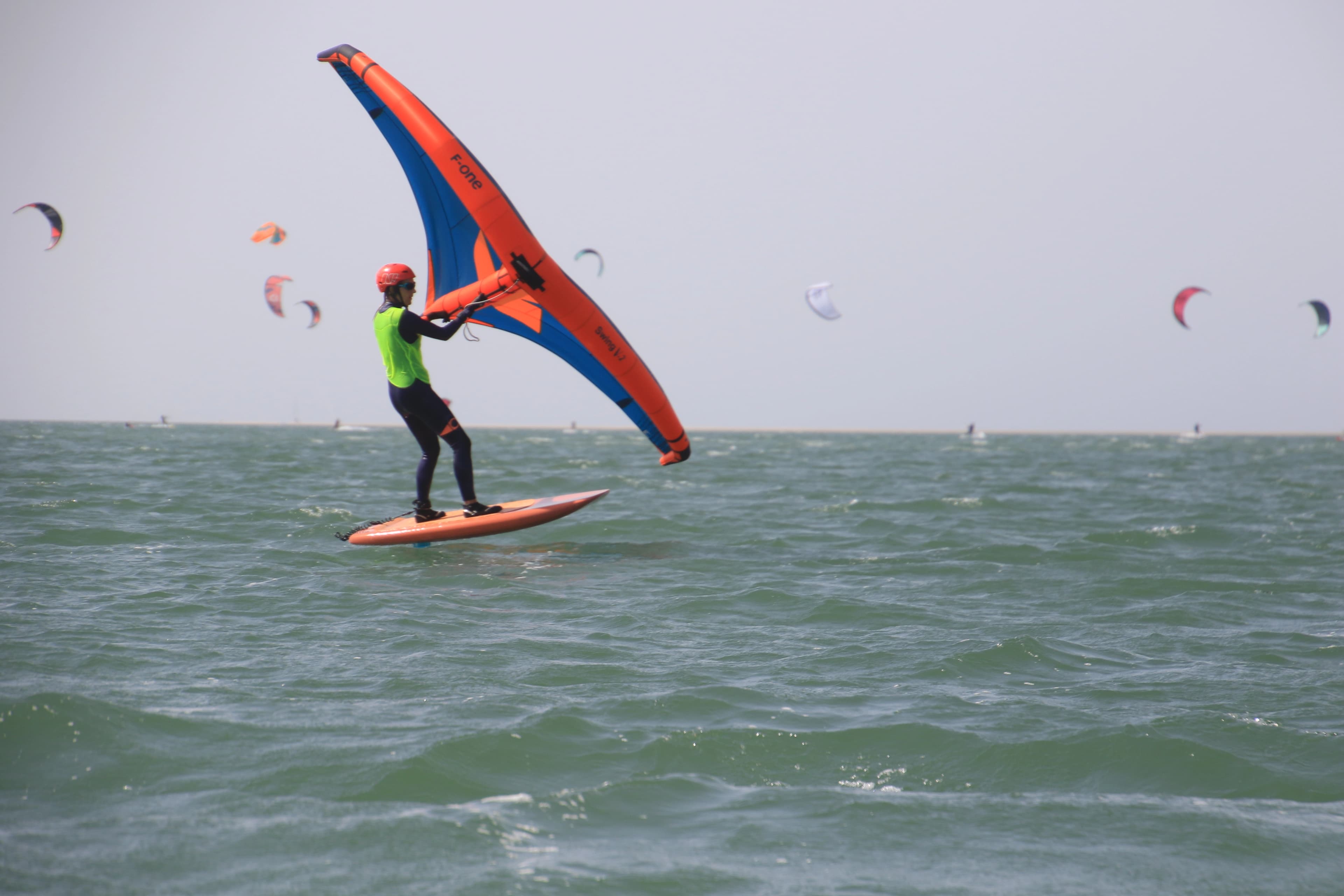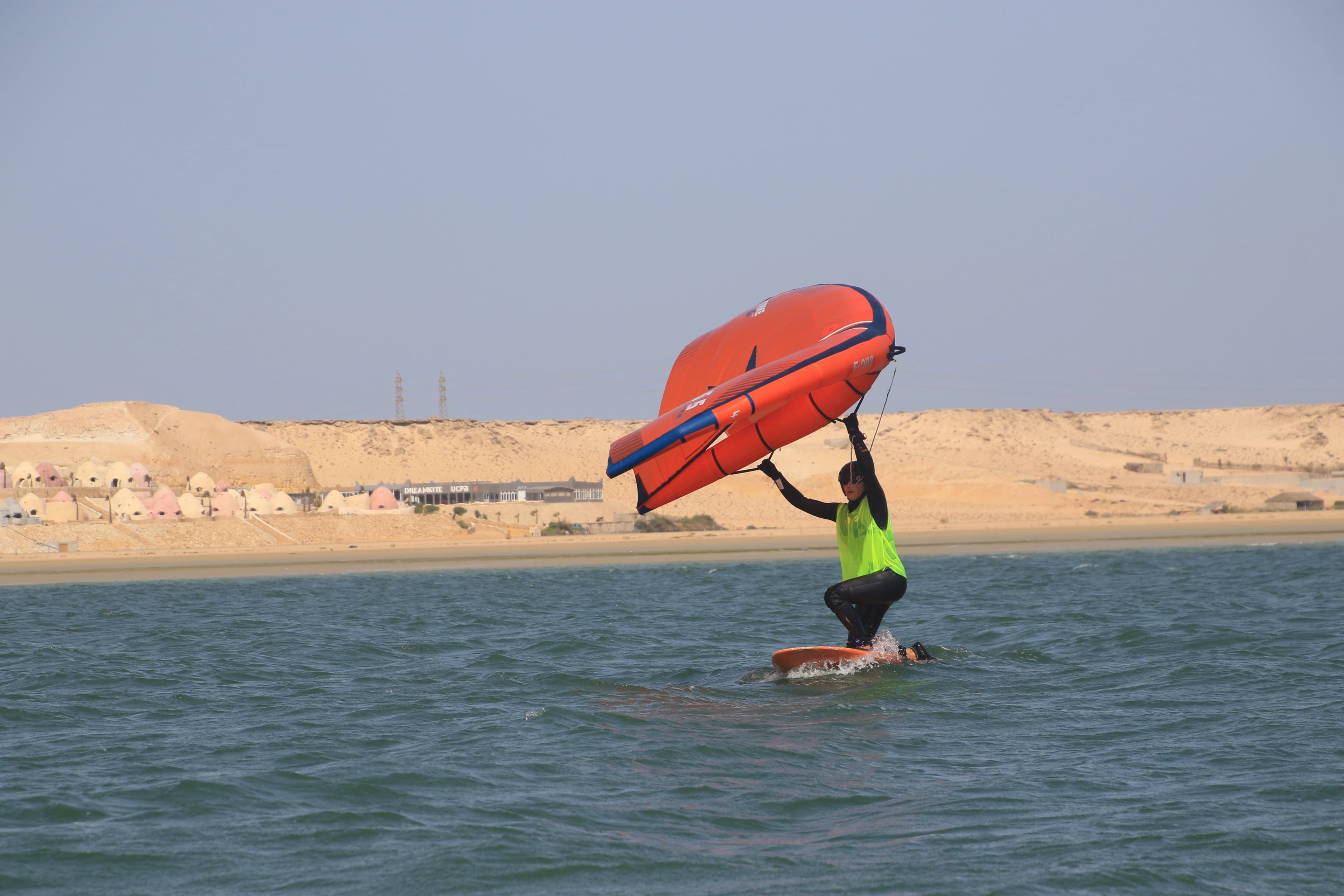
Imagine this. You are on a wide, flat lagoon. The water is warm. The wind is steady. There is no current pulling you, no wave pushing you, no reef underneath, no rocks, no sharks. Just flat water stretching in every direction, a kite in the sky above you, and a board under your feet that is about to take you somewhere new.
That is Dakhla. And that is where most kitesurfers' real story begins.
Why This Lagoon Exists for Kitesurfing#
Dakhla's lagoon is a setup that almost seems built for learning kite. A long peninsula shelters a massive body of flat water from the Atlantic swell. The Saharan thermal effect pushes consistent wind across the surface almost every day. The bottom is clean sand with no rocks or reef. Wind direction is typically side shore or side on shore, which keeps you naturally in safer angles instead of pulling you out to sea.
What that means for you: when you fall, you fall into warm, flat water. When the kite drops, relaunching is easy. The lagoon has both shallow areas and deeper sections, and the team uses each one at the right stage of your progression. No current fighting you, no chop confusing your reading of the wind, no hazards underneath.
The team picks you up from your hotel, most of which sit right around the lagoon. Some hotels are a 5 to 10 minute walk from where we operate. Others are a short drive of less than 5 minutes. No long transfers, no lost time. You go from breakfast to the water without it feeling like a commute. You can book your kitesurf lessons in Dakhla directly, or read on for what the days actually look like.
Day 1: The Kite, the Bar, and the First Hour#
Your first session does not start in the water. It starts on the beach.
The instructor walks you through the safety system, how the bar works, how to depower the kite, how to release everything if anything goes wrong. You handle a small training kite first. You learn how the wind window works, how the kite generates pull, how to steer it through the sky without panicking. This sounds like a lot, but most people get it within the first 30 to 45 minutes. The kite responds in predictable ways once you stop fighting it.
Then you move to a bigger kite, in the water. You do body drags. Kite in one hand of control, body in the water, learning to use the kite to pull you across the surface in different directions. No board yet. The body drag teaches you what the kite actually feels like when it is generating real power, and how to recover the board if it ever flies away from you on a real session.
By the end of day 1, most beginners can launch and land the kite safely (with an assistant), control it through the wind window, depower in seconds, and body drag in both directions. No board on the feet yet. That comes when the kite control is ready, not when the clock says so.
After the session, we drive you back to your hotel, or you walk if it is close. The rest of the day is yours. Some people nap. Some explore. Some come back for a second session later when they feel recharged. The schedule is flexible because the wind usually is too.
Day 2: The Board Comes Out#
If day 1 went well, day 2 is where things start to feel different.
You strap into the board. The instructor positions you so the kite is in the right part of the wind window for a slow, controlled pull. You commit to the position, the kite generates power, and the board pulls you onto your feet. The first time you stand up on a kiteboard and ride for even three meters, something clicks that does not unclick.
Most people fall many times before they hold a real ride. That is normal. Each fall teaches you something the previous one did not. The instructor is right there, watching the kite position, your edge angle, how you absorb the pull. Every correction is immediate. You do not practise bad habits for an hour before someone tells you. The feedback loop is tight because the conditions allow it. Flat water, warm temperature, steady wind. No variables fighting against your learning.
Most beginners by the end of day 2 have stood up on the board multiple times and held short rides. The consistency is not there yet, but the feeling is. That feeling is what brings you back for day 3. Our breakdown of the most common waterstart mistakes beginners make covers what we watch for at this stage and how the team corrects it.
Day 3 and Beyond: When It Clicks#
Day 3 is usually when the brain and body start agreeing. Kite handling becomes automatic. Edge control feels natural. Falls happen less often, and when they do, you know exactly why. You start to hold rides for 10, 20, 50 meters.
From here, progression accelerates. You learn to ride upwind, which is the moment you stop drifting and start actually going where you want to go. You start to chain transitions. By the end of a 4 to 6 session camp, most beginners ride independently across the lagoon and can stay upwind without help.
For intermediate riders who arrive already comfortable, the camp picks up from wherever you are. Toeside, transitions, jumps, kite loops, strapless work, wave riding, and downwinders to the White Dune. The lagoon gives you unlimited space to drill specific skills without crowds, current, or obstacles fighting you.
If you already know the basics and prefer to ride independently, equipment rentals on the Dakhla lagoon are also an option, and our guide on renting kitesurf gear in Dakhla covers what to expect.
What Happens Between Sessions#
The session ends. You are tired in that specific kitesurfer way: forearms burning, salt on your skin, grinning. The team drives you back to your hotel or you walk the short stretch along the lagoon.
The rest of the day unfolds at your pace. Most hotels around the lagoon have pools, terraces, and restaurants. You recover, eat, watch the lagoon from the shore while other riders are still out.
If you want a second session, the team comes back when you are ready. No fixed schedule. You agree on a time that works, and they are there.
Some days, the team organizes lunch or dinner at the oyster farms on the lagoon or at local restaurants nearby. Fresh oysters straight from the water, grilled fish, Moroccan dishes. These are not packaged events. They happen when clients are interested and the timing fits.
When the group is the right size, the evenings are something else. Sunset drinks on the lagoon shore. A fire on the sand. The kind of night that happens naturally when 8 or 10 people who spent the day with kites in the sky sit together and watch the sky turn from blue to gold. The team is there, other clients are there, and the conversation flows the way it does when everyone shares the same obsession.
These are not part of any package. They are part of the place.
The Lagoon After Hours#
There is a moment in Dakhla that most kitesurfers remember longer than any single session.
The wind drops in the evening. The lagoon goes glassy. The light shifts from blue to gold. The water reflects the sky so perfectly that you cannot tell where one ends and the other begins. Flamingos stand in the shallows. The Sahara glows behind the peninsula.
You are sitting on the shore with salt on your skin, tired muscles, and the certainty that tomorrow morning you get to do it again.
That part no video captures and no website sells. It just happens, every evening, to everyone who is there.
Who This Is For#
You do not need experience. The camp starts from zero and builds step by step. You do not need to be athletic. You need to be willing to fall, laugh, and try again.
You do not need to come with a group. Solo travelers join the sessions and connect naturally with other riders and the team through shared meals, shared sessions, and shared sunsets.
You do not need to bring gear. Everything is provided: kite, bar, board, harness, wetsuit, and safety equipment. If you want to know what to pack and what conditions to expect at different times of year, our Dakhla weather and wetsuit guide covers it.
You just need to show up and trust the process. The lagoon and the team handle the rest.
Ready to plan your trip? You can book your kitesurf camp directly or reach out to the team to talk through dates, level, and what to expect.
Frequently Asked Questions#
How many days should I book for a kitesurf camp?
Most beginners see real progress in 4 to 6 sessions spread over 3 to 5 days. If you want to ride independently and stay upwind, a full week gives you the best chance. Intermediate riders can achieve specific goals in fewer sessions.
Do I need previous experience?
No. The camp starts from zero: kite control on the beach, body drag in the water, then board work. Each step builds on the last.
What if I am already intermediate?
The team picks up from your current level. Upwind, transitions, jumps, kite loops, strapless, wave riding, downwinders. No time wasted repeating what you already know.
How close are the hotels to the lagoon?
Most hotels are right around the lagoon. Some are a 5 to 10 minute walk from where we operate, others a short drive of less than 5 minutes. The team picks you up and drops you back.
Can I do two sessions in one day?
Yes. After your first session, you rest at your hotel and the team picks you up again when you are ready. The schedule is flexible.
Is gear provided?
Everything is included: kite, bar, board, harness, wetsuit, and safety equipment. You do not need to bring any kit.
What is there to do between sessions?
Rest at your hotel, use the pool, explore. The team can organize lunch or dinner at the oyster farms or local restaurants if you are interested. Evening gatherings happen when the group vibe is right.
Is Dakhla safe?
Yes. The lagoon area is calm and secure. Our Dakhla safety guide covers everything from transport to daily life around the lagoon.
Our team runs kitesurf camps on Dakhla's lagoon every day of the season. This article reflects what real beginners and intermediates go through, not theory.