
If you ride in Dakhla long enough, eventually someone mentions the White Dune. They will say it the way people talk about a place they keep going back to. A downwinder that ends in the middle of the lagoon, at a sand dune that sits in the water like nothing you have seen before.
This is what the day actually looks like.
What a Downwinder Means#
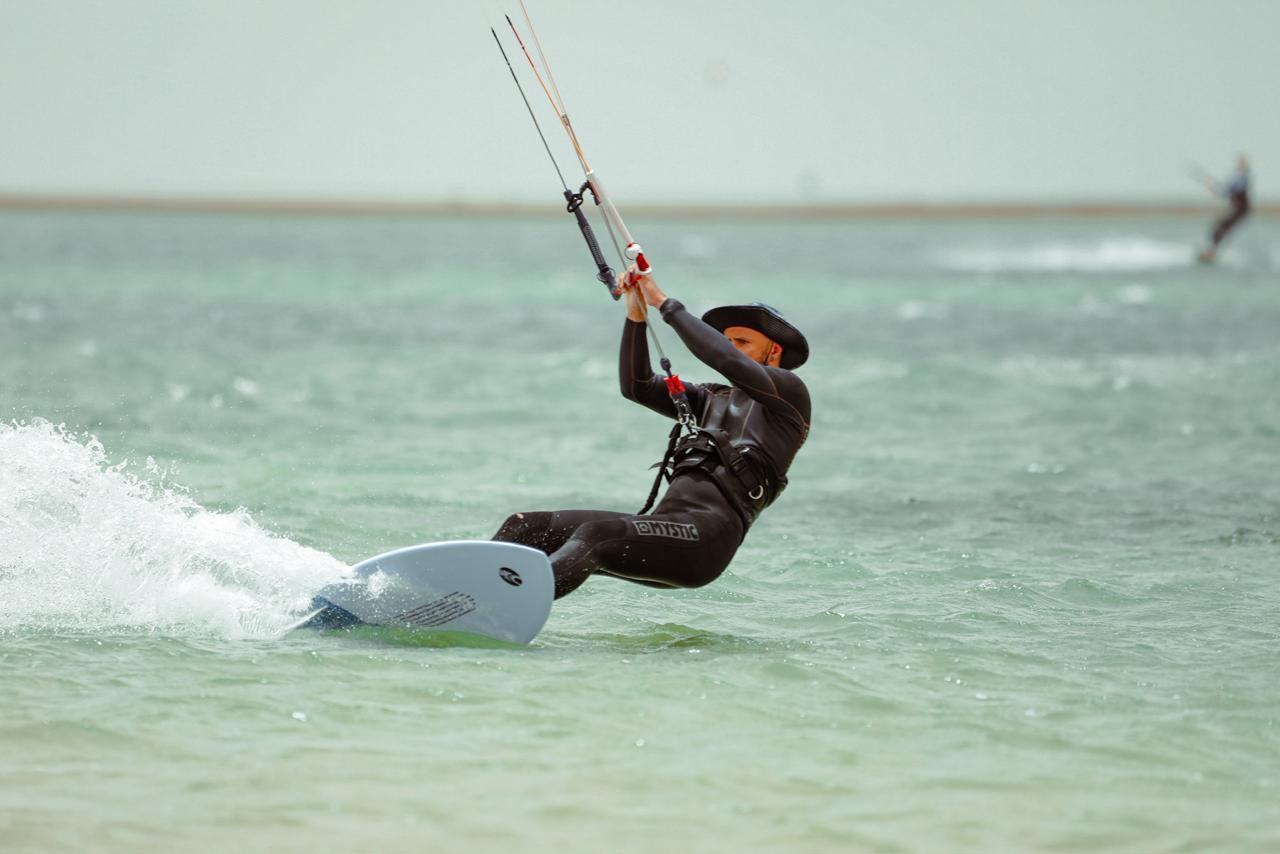
A downwinder is a kite session where you ride with the wind at your back, covering distance instead of staying in one spot. You launch from one point and land at a different one further down the coastline. You do not try to go upwind. You let the wind take you.
What makes a downwinder different from a normal session is the feeling of moving through the landscape. You are not circling a familiar zone. You are riding past changing terrain, watching the lagoon open up around you, covering kilometers instead of meters. It is the closest kitesurf experience to a road trip.
In Dakhla, the most iconic downwinder ends at the White Dune. And the reason it works has everything to do with the tide.
The High Tide Window#
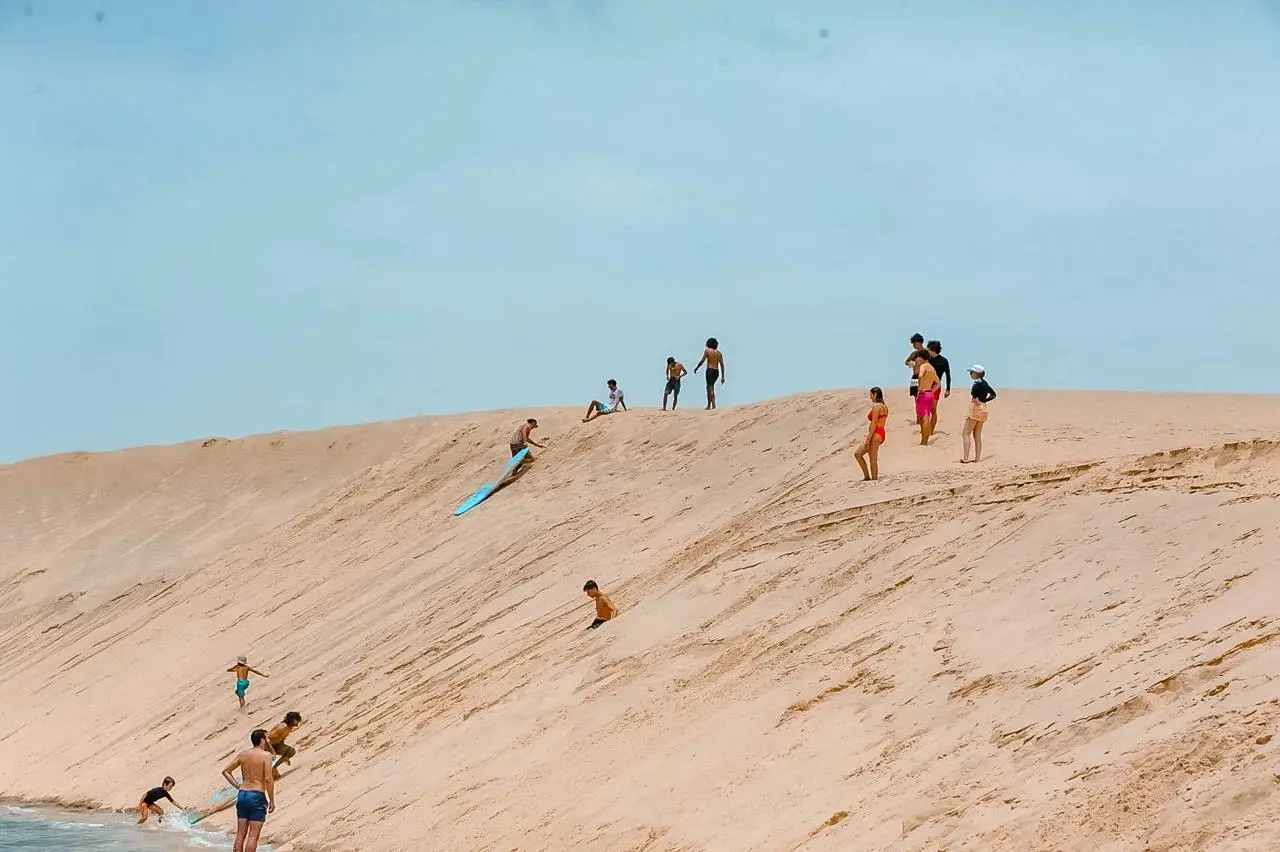
The White Dune is a sand formation that sits in the middle of the lagoon. At low tide, it is just a hill on a stretch of exposed sand. The water is far away, the surroundings are dry, and the view is missing something.
At high tide, everything changes. The water rises around the dune until it is surrounded on all sides. The sand becomes an island. The reflection on the water doubles the dune in size. The light turns it gold. This is the moment people remember and the moment we plan the trip around.
The team checks tide forecasts and picks the days when high tide aligns with usable wind. We do not run this trip just because someone asked. We run it when the conditions will deliver the experience.
The Day Begins at the Camp#
The morning starts the same way most days do in Dakhla. Breakfast at your hotel. Pickup by the team. A short drive or walk to where we operate on the lagoon.
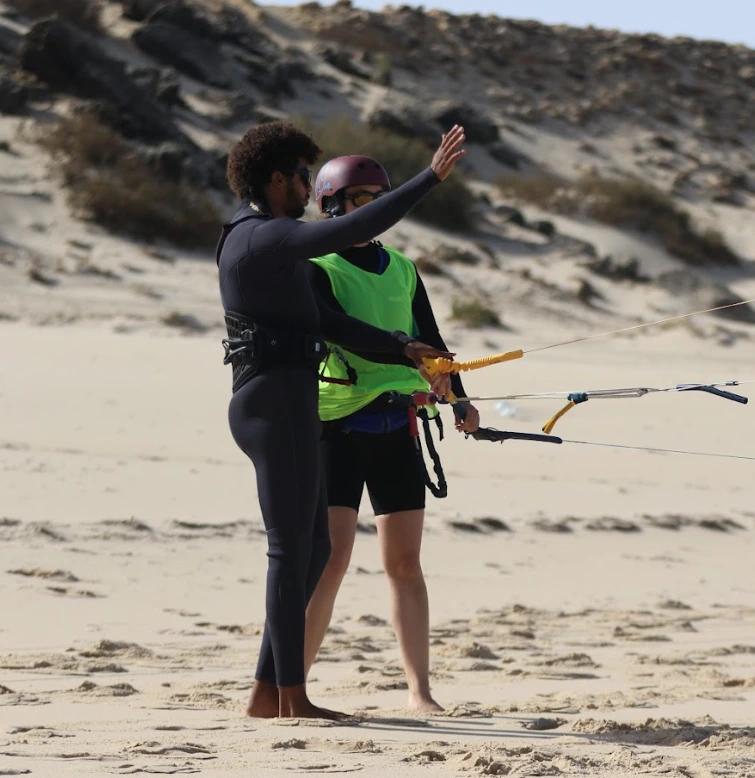
The difference is the briefing. Before launching, the instructor walks the group through the route, the wind direction, the meeting point at the end, and what to do if anything unexpected happens during the ride. Lost board, broken line, equipment failure, anything. The plan is clear before anyone touches the water.
Gear is checked, kites are pumped, and the group launches together.
Riding to the Dune#
You launch and you point downwind. The team rides with you. One of our coaches downwinds with the group the entire way, watching for issues, helping if someone loses a board, guiding the path through the lagoon. If the group is large, we organize a rescue boat that follows alongside, providing extra support and a recovery option if needed.
The ride takes you across stretches of lagoon that most riders never see during normal sessions. The water shifts color depending on depth. The shoreline changes from beach to flats to wider open water. Other riders are dots in the distance, far behind. You are moving forward with the wind, and the rhythm of the ride takes over.
The whole time, our support car is driving in parallel along the shore. They are heading to the same meeting point you are riding to. They carry water, snacks, and dry layers for after.
Arriving at the White Dune#
You get to the dune and you do not just take a photo and leave. That is not the point.
When the conditions allow, riders spend a couple of hours kiting around the dune itself. The wind angle, the flat water around the formation, and the visual of the dune in the middle of the lagoon make this one of the most photogenic riding zones on the planet. You ride past it, around it, alongside it. You stop on the sand to drink water. You launch again. Riders take turns getting the angle right for photos and videos. The whole atmosphere is different from a normal session because you are riding inside a place that is unlike anywhere else.
When everyone has had their fill, the day winds down. The car is there with snacks and drinks. The team helps wrap kites and load gear. You climb in, and we drive everyone back to the camp together. The conversation on the way back is always the same: people remembering specific moments from the ride, planning the next one, sharing the photos they got.
What Makes This Trip Different#
A downwinder to the White Dune is not the same as a long session in one spot. The difference is in the structure of the day.
You are moving through a landscape, not staying in one place. The team is part of the experience. Someone rides with you, someone drives parallel, someone has water and snacks waiting. You are not navigating logistics. You are kiting, and the rest is handled.
You get the dune at the moment when it actually looks like the dune. High tide, water all around, golden light. Not the dry hill version that some visitors see when they show up on the wrong day.
And you ride at the dune, not just to it. The full experience includes the time spent at the destination, not just the journey there.
Who This Trip Is For#
The White Dune downwinder is for riders who can ride upwind and stay in control of their kite during a continuous distance ride. You do not need to be advanced, but you need to be past the upwind learning stage.
If you are still working on upwind ability or first independent rides, the team will recommend a few more kitesurf lessons in Dakhla on the main lagoon before joining a downwinder. There is no rush. The dune will be there next time the tide is right.
If you have the skill level, the trip becomes one of the things you tell people about when they ask what Dakhla was actually like.
Logistics in Brief#
- The team checks tide and wind to pick the right day. The trip runs when conditions align.
- One coach downwinds with the group, guiding the route and helping with any issues.
- A rescue boat is organized for larger groups.
- The support car drives in parallel and meets the group at the dune with water, snacks, and dry layers.
- Riders spend a couple of hours kiting around the dune at high tide, not just arriving and leaving.
- The car brings everyone back to the camp at the end.
- Equipment rental is separate from the trip itself. If you are not bringing your own kit, the team can handle the rental on the lagoon, and our guide on renting kitesurf gear in Dakhla covers what to expect.
You can book the White Dune downwinder through our excursions or contact the team to ask about timing, conditions, and what your group needs. If you are still building skills, our kitesurf camp guide walks through how the lagoon prepares you for trips like this.
Frequently Asked Questions#
Do I need to be an expert to do the downwinder?
No. You need to ride upwind and stay in control of your kite during a longer ride. If you are at that level, the trip works. If not, the team will tell you what sessions to do first.
What happens if I lose my board during the ride?
The coach riding with the group helps you recover. If a rescue boat is on the trip, it provides extra support. You are not on your own at any point.
Is the dune always surrounded by water?
No. The White Dune sits in the middle of the lagoon and looks most striking at high tide when water surrounds it. The team plans the trip around tide and wind to give you that view.
How long is the actual downwinder?
The full trip runs around 3 to 4 hours from briefing to return. That includes the ride to the dune, the time spent kiting around it at high tide, and the drive back by car.
Is gear included in the trip?
Equipment rental is separate from the excursion itself. You can either bring your own kit or arrange a rental with the team. Both options work.
What do I bring with me?
Wetsuit (provided if needed), sunscreen, water, and your own equipment if you have it. The car carries water and snacks for the return.
Can I take photos at the dune?
Yes. The dune at high tide is one of the most photogenic spots on the lagoon. You will have time during the rest stop to get photos and videos.
What if conditions are not right on my booked day?
The team monitors the forecast. If conditions do not align for the downwinder, we either reschedule the trip or run a regular session instead. We do not force the trip in bad conditions.
Our team has guided downwinders to the White Dune for years. This article reflects the actual flow of the day, not a marketing pitch.