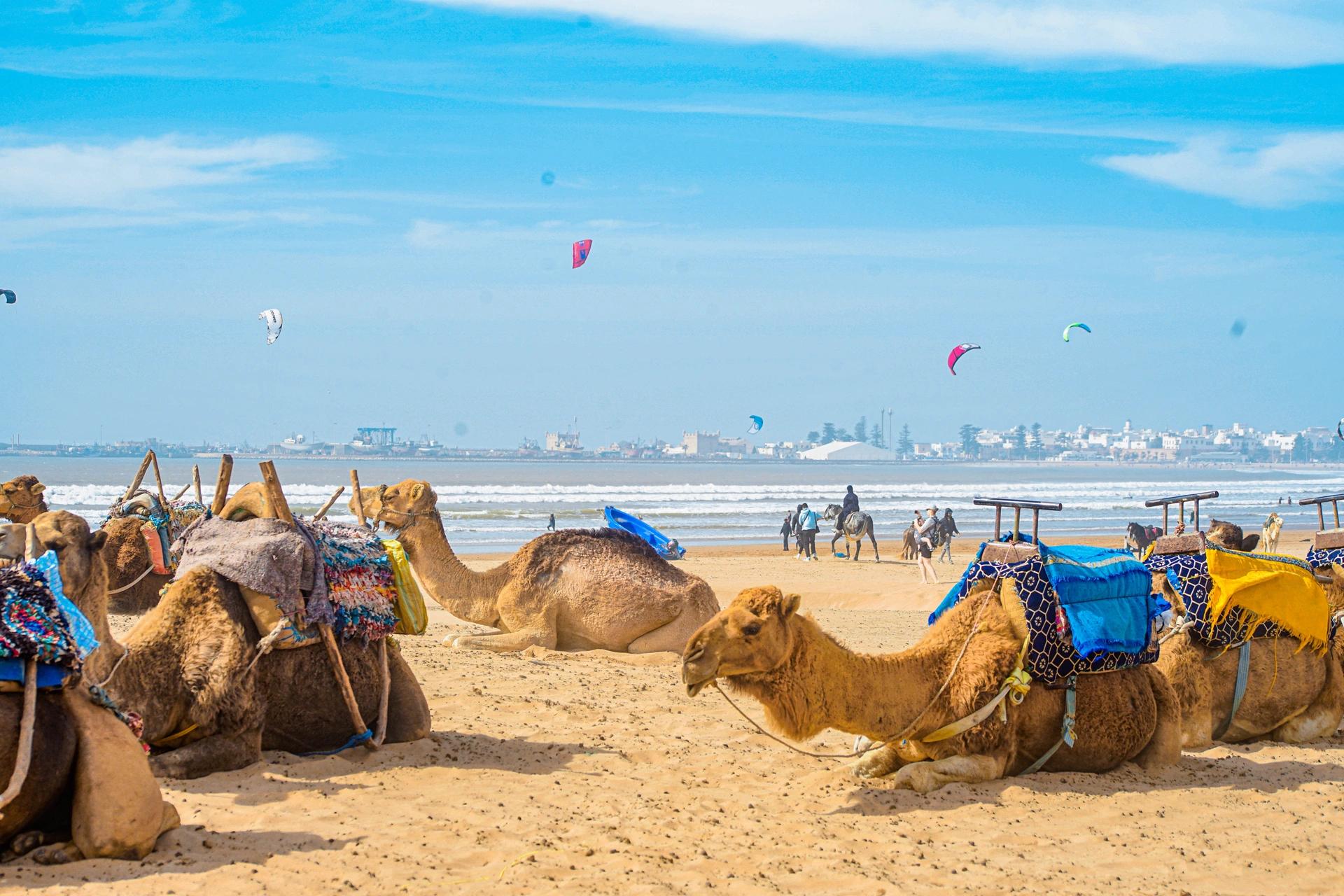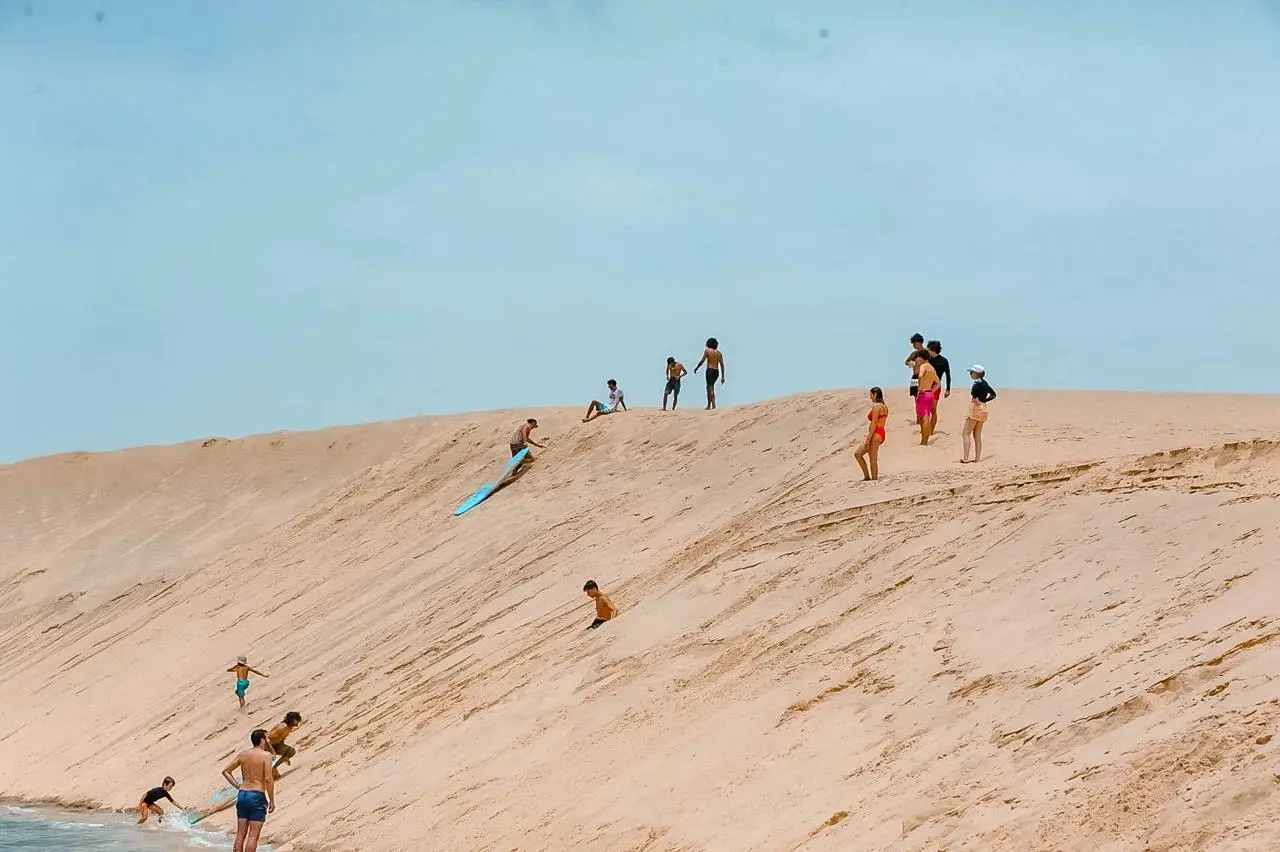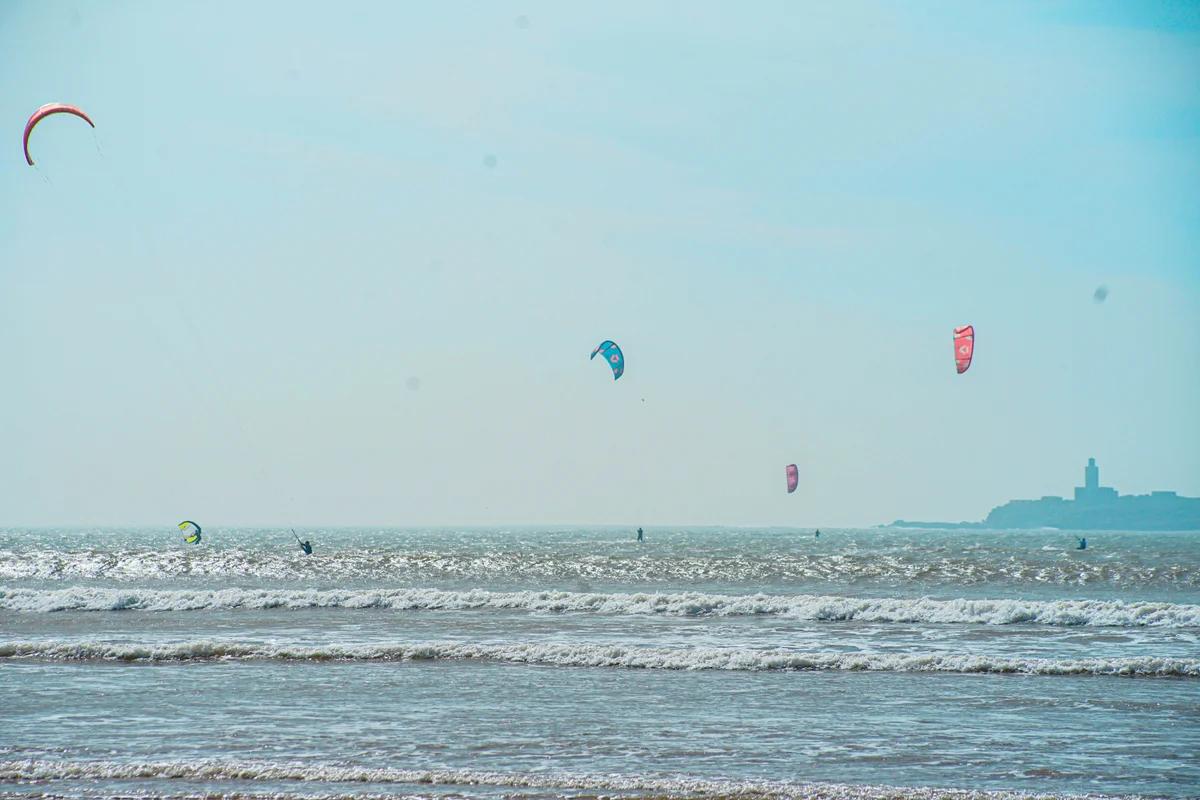

Essaouira sits on Morocco's Atlantic coast, directly exposed to the Alizé trade winds that make it one of the most reliable kitesurf destinations in North Africa. Wind blows year-round here, but strength and consistency change between seasons. Each period has its own character, and the team teaches all levels throughout the year.
This guide breaks down Essaouira's wind conditions month by month so you can plan around real data, not vague promises of "great wind."
Why Essaouira Works for Kitesurfing#
The Alizé trade winds blow predominantly from the north to northeast, funneled and accelerated by the coastline and the nearby Atlas mountains. This creates a thermal effect that kicks in reliably through late morning and holds until evening during peak season.
The main teaching and riding spot is Essaouira's main beach, roughly five minutes by car from the medina and walkable in under ten minutes. The beach is wide, the launch area is accessible, and you can fit two sessions in a single day without losing time on transport. The typical day goes: morning session, break at a beachfront café, second session in the afternoon, dinner in the medina.
One important distinction from flat-water spots like Dakhla: Essaouira is open ocean. You ride in real swell, real current, and side-onshore wind. There is no lagoon. This means conditions are more dynamic, but the skills you build transfer to any ocean kitesurf spot in the world.
April to September: Peak Season#
This is the window most kitesurfers target. Trade winds are at their strongest and most consistent, with rideable days running well above 80% of the time.
What the wind does:
- Picks up most days between 10am and noon
- Holds through the afternoon, often overnight
- Averages 18 to 25 knots in June through August, sometimes gusting higher
- April, May and September are slightly lighter at 16 to 22 knots
Kite sizes (rough guide only):
- 65-80 kg rider: 9m to 12m covers most days. A 7m is useful in July and August if you are lighter or the wind peaks.
- Heavier riders (80-95 kg): 10m to 14m range. Strong days still need a 10m, lighter days a 12 to 14m.
- These are general estimates. The right kite depends on wind strength, your experience, riding style, and kite model. If you are renting or taking lessons, the team selects the size for you based on the day's conditions.
Water and wetsuit:
- Water temperature: 18 to 20°C year-round thanks to the Canary Current. Even in August, the water stays cool.
- A 3/2mm wetsuit is standard for summer. Boardshorts alone are uncomfortable for most people after 30 minutes.
Who this season suits:
- Intermediate to advanced riders wanting daily powered sessions
- Riders training for progression (jumps, transitions, wave riding)
- Beginners at any point in the season: the team adapts kite size, session timing and teaching zones to match the day's wind
If you are planning your first kitesurf trip to Essaouira, you can check lesson formats and availability here.
October to March: Off-Peak but Still Rideable#
Winter does not mean no wind. It means less consistent wind. Around 20% of days from October through March may have little or no usable wind for kitesurfing. The remaining days still deliver sessions, often with lighter, more manageable conditions.
What the wind does:
- Averages 12 to 18 knots on active days
- More variable direction and strength compared to summer
- Some days deliver 20+ knots, others are calm
- Best kite days often come in clusters of 2 to 3 days followed by lighter spells
Kite sizes you will need:
- Larger kites are essential. A 10m to 12m covers most rideable winter days for a 70-80 kg rider.
- If you only travel with a 7m, you will sit out more days than you ride.
Water and wetsuit:
- Water drops to around 17°C. A 4/3mm wetsuit is recommended.
- Air temperature sits between 15 and 18°C. Comfortable on the beach between sessions.
Who visits in this period:
- Riders combining kitesurf with other activities (Essaouira has plenty to do on rest days)
- Travelers with flexible schedules who can adjust around wind days
- All levels: the team runs lessons whenever conditions allow, adapting the setup to the day
The upside of winter: the beach and water are far less crowded. On a good wind day in December, you may have more space than you would ever get in July.
Month-by-Month Breakdown#
January and February: The quietest wind months. Expect 12 to 16 knots on rideable days, with calm spells mixed in. Plan for 3 to 4 kiteable days per week at best. Wetsuit 4/3mm. Air 15 to 17°C.
March: Wind starts building. You see more frequent 15 to 20 knot days. Still variable, but the ratio of rideable days improves. A transitional month that hints at the season to come.
April: The season opens. Wind becomes reliable at 16 to 22 knots most afternoons. A popular month for beginners thanks to consistent wind and comfortable conditions. Water around 18°C, 3/2mm wetsuit.
May: Similar to April with slightly more strength. Wind averages 18 to 22 knots. Fewer tourists than summer, good conditions, comfortable temperatures. Daily sessions are reliable.
June: Full trade wind power arrives. Expect 20 to 26 knots regularly. Daily sessions are almost guaranteed. This is when Essaouira starts filling up with kitesurfers. Water around 18 to 19°C.
July and August: Peak intensity. Wind frequently hits 22 to 28 knots, sometimes more. Great for powered sessions and big air. Beginners still train daily during this period: instructors use smaller kites, choose the right timing in the wind window, and adjust session length to keep learning productive. The beach is at its busiest.
September: Wind holds strong at 18 to 24 knots but eases toward month's end. Still very reliable, with fewer crowds than mid-summer. One of the best overall months for kitesurfing in Essaouira.
October: The transition back to off-peak. Wind drops to 14 to 20 knots. You still get good sessions, but they are less guaranteed. The crowd thins out significantly.
November and December: Wind becomes variable at 12 to 18 knots. Rideable days are less frequent but still happen. Larger kites become essential. The city is quiet and the experience is more relaxed.
What Each Season Feels Like on the Water#
Summer (June to August): Strong, consistent power. The kite responds quickly, relaunches are easy, and getting out of the water takes little effort. Sessions feel dynamic. The beach is busy with riders from all over.
Shoulder months (April, May, September, October): Reliable wind with a bit more variation day to day. The atmosphere is quieter, the water less crowded. Many riders consider these the most enjoyable months overall.
Winter (November to March): Lighter and more variable. You ride bigger kites, and the pace is calmer. Rest days give you time to explore the medina, eat fresh fish, and enjoy Essaouira beyond the beach. When the wind does show up, you often have the water to yourself.
The team teaches all levels in every season. Kite size, session timing and teaching approach are adjusted daily based on what the wind is doing.
Planning Logistics#
How many days to book: In peak season (June to September), 3 days is enough for near-guaranteed sessions. In shoulder months (April, May, October), book 4 to 5 days. In winter, a full week gives you the best chance of landing 3 to 4 good days.
Getting there: Essaouira is roughly 2.5 hours from both Marrakech and Agadir by car. Easy to combine with a broader Morocco trip. The airport in Essaouira (ESU) has limited direct flights, so most visitors fly into Marrakech and drive or take a bus.
Daily rhythm: Session in the morning when the wind builds, lunch break at a beachfront restaurant, optional second session in the afternoon. The main beach is close enough to the medina that you can walk back for a break without losing half your day.
Ready to plan your sessions? You can book your kitesurf lessons in Essaouira here or contact the team directly to discuss dates and wind outlook.
Frequently Asked Questions#
Can you kitesurf in Essaouira in winter?
Yes. Wind is lighter and less predictable from October to March, but many days still deliver rideable conditions. Build flexibility into your schedule and bring a larger kite (10m+).
What is the windiest month in Essaouira?
July and August typically deliver the strongest and most consistent wind, averaging 22 to 28 knots. June and September are close behind.
Is Essaouira windy all year?
Wind blows year-round, but intensity varies. Summer is strongest. Winter has lighter, more variable wind with around 20% of days seeing little or no usable wind for kiting.
Do I need a wetsuit for kitesurfing in Essaouira?
Yes, in every season. The Canary Current keeps water around 17 to 20°C. A 3/2mm works for summer, 4/3mm for winter.
Is Essaouira good for beginner kitesurfers?
Yes, year-round. The team adapts kite size, session timing and teaching approach to the day's conditions. You learn in real ocean conditions, which builds strong fundamentals that transfer anywhere.
What kite size should I bring to Essaouira?
Wind varies between seasons, so covering all conditions means traveling with multiple kites. A 70 to 80 kg rider would need a 9m and 12m for peak season, or a 10m and 12m for winter. Many riders skip the baggage fees and rent gear on site instead. The team matches kite size to the day's conditions, so you always ride the right setup without packing for every scenario.
How does Essaouira compare to Dakhla for kitesurfing?
Dakhla offers flat-water lagoon conditions, ideal for beginners and freestyle. Essaouira is open ocean with chop and swell, better for building all-round skills and wave kiting. Both work, just different experiences.
How far is the beach from the city?
Essaouira main beach is about five minutes by car from the medina, or under ten minutes on foot.
Local coaching team based in Essaouira and Dakhla with 10+ years of teaching experience. Daily wind monitoring and spot checks across both locations.